Agentic Trading
For NickAI
Role
Product Designer
Period
2026
Skills Utilized
Overview:
Backstory of the work.
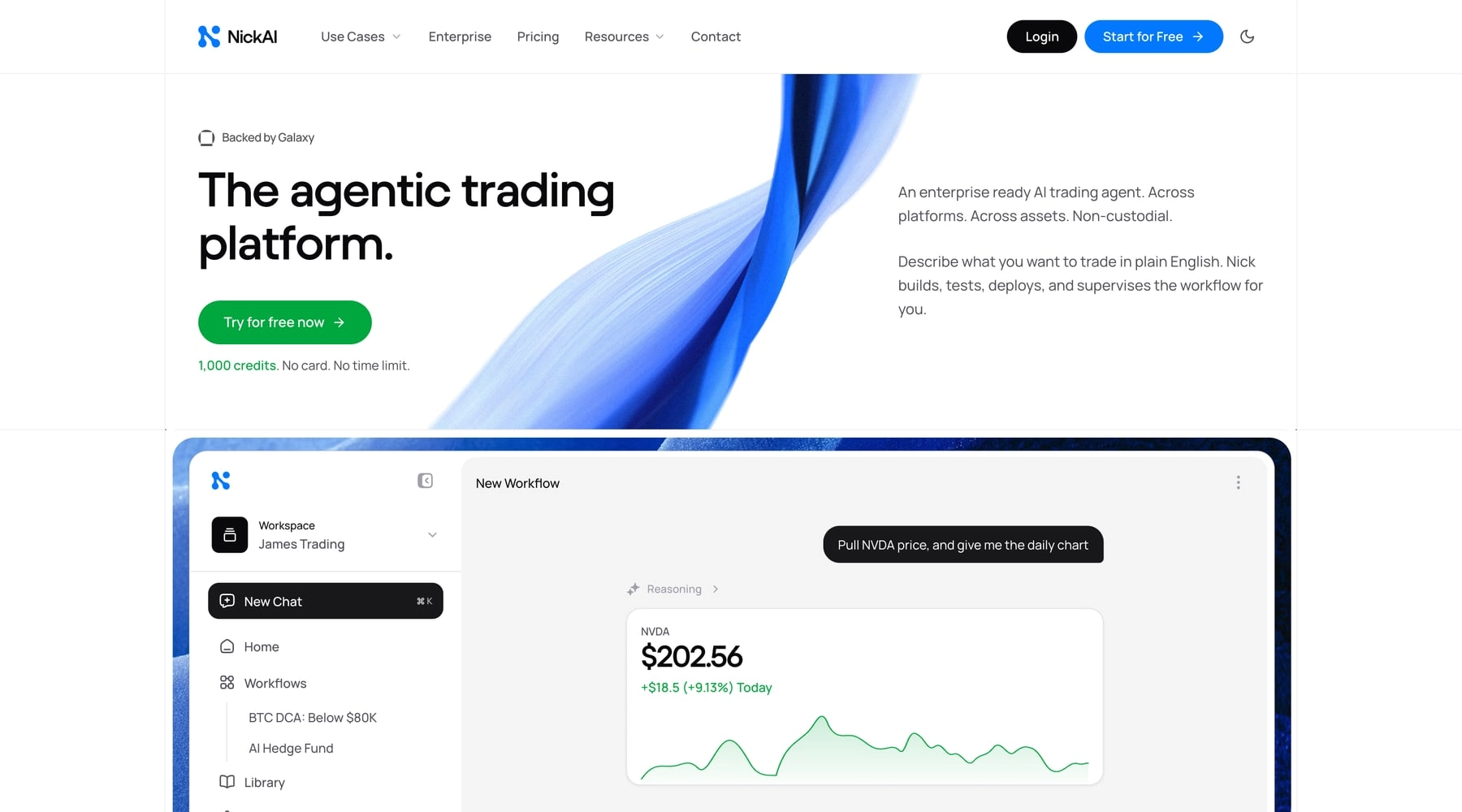
NickAI is an agentic trading platform. You describe what you want to trade in plain English, and Nick, a non-custodial AI agent, turns it into a workflow that it builds, tests and runs across crypto, stocks and prediction markets.
As NickAI's designer in 2026, I worked across its surfaces: the product's design language and chat widgets, the prototypes that became the spec, the getnick.ai website, and a small content engine for launch visuals.
Prototypes.
Designing in code.
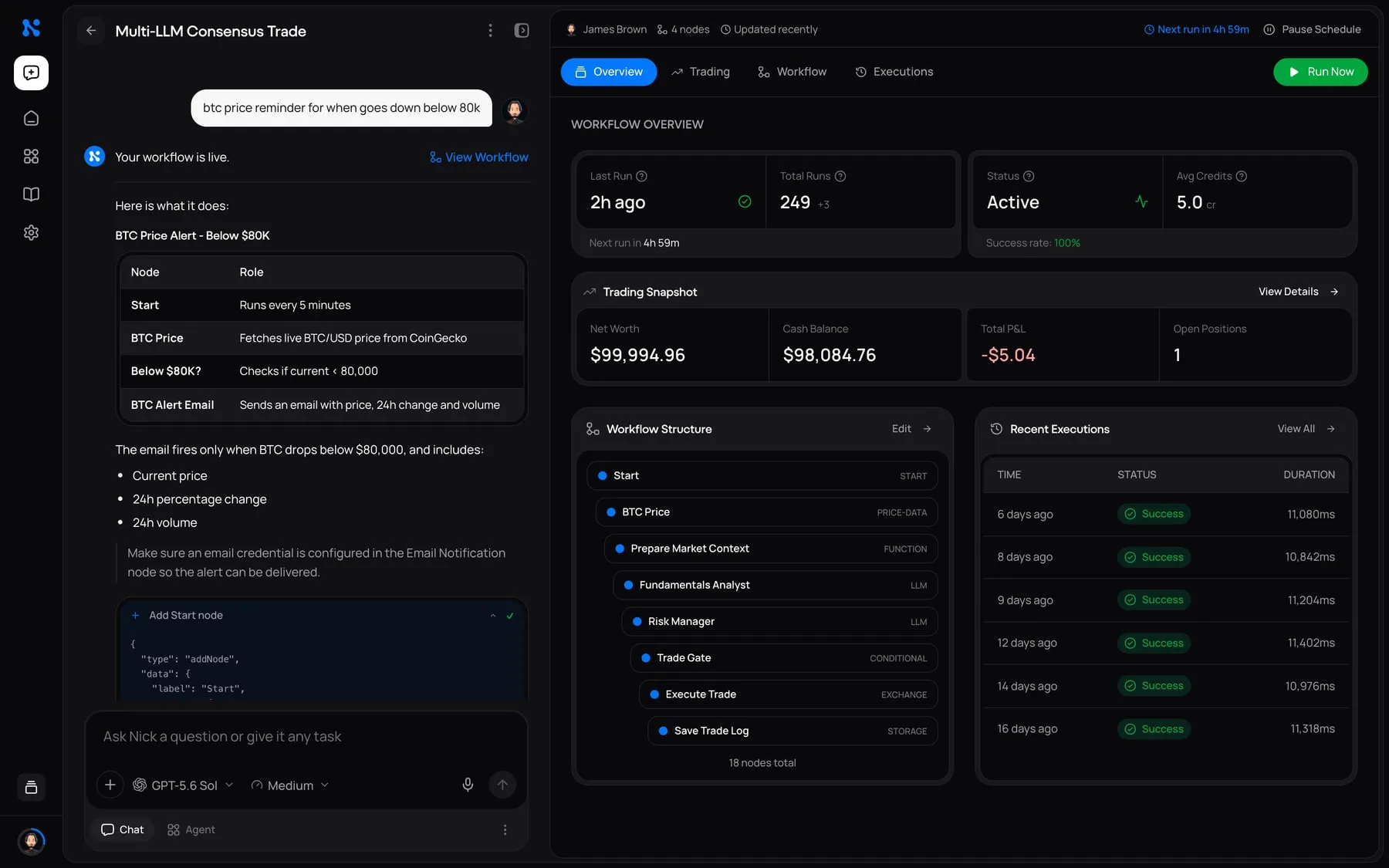
Instead of handing over static mockups, I built working prototypes in code: chat beside a live workflow, its structure, scheduled runs and execution history, all in one frame. Engineering then ported the prototype's design system straight into the product, with its tokens, components, typography, icon set and floating-panel app frame.
Widgets.
Ask a question, get a chart back.
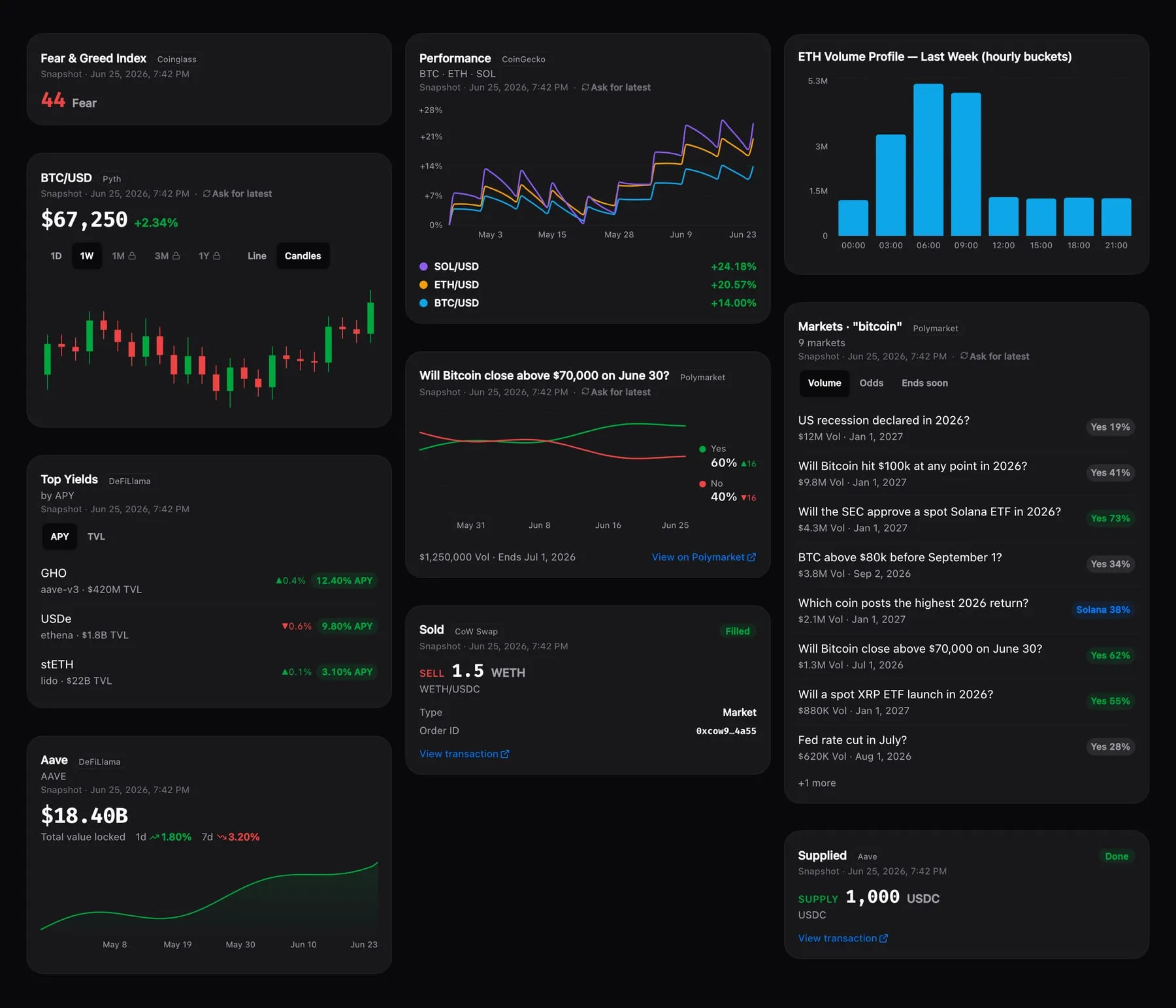
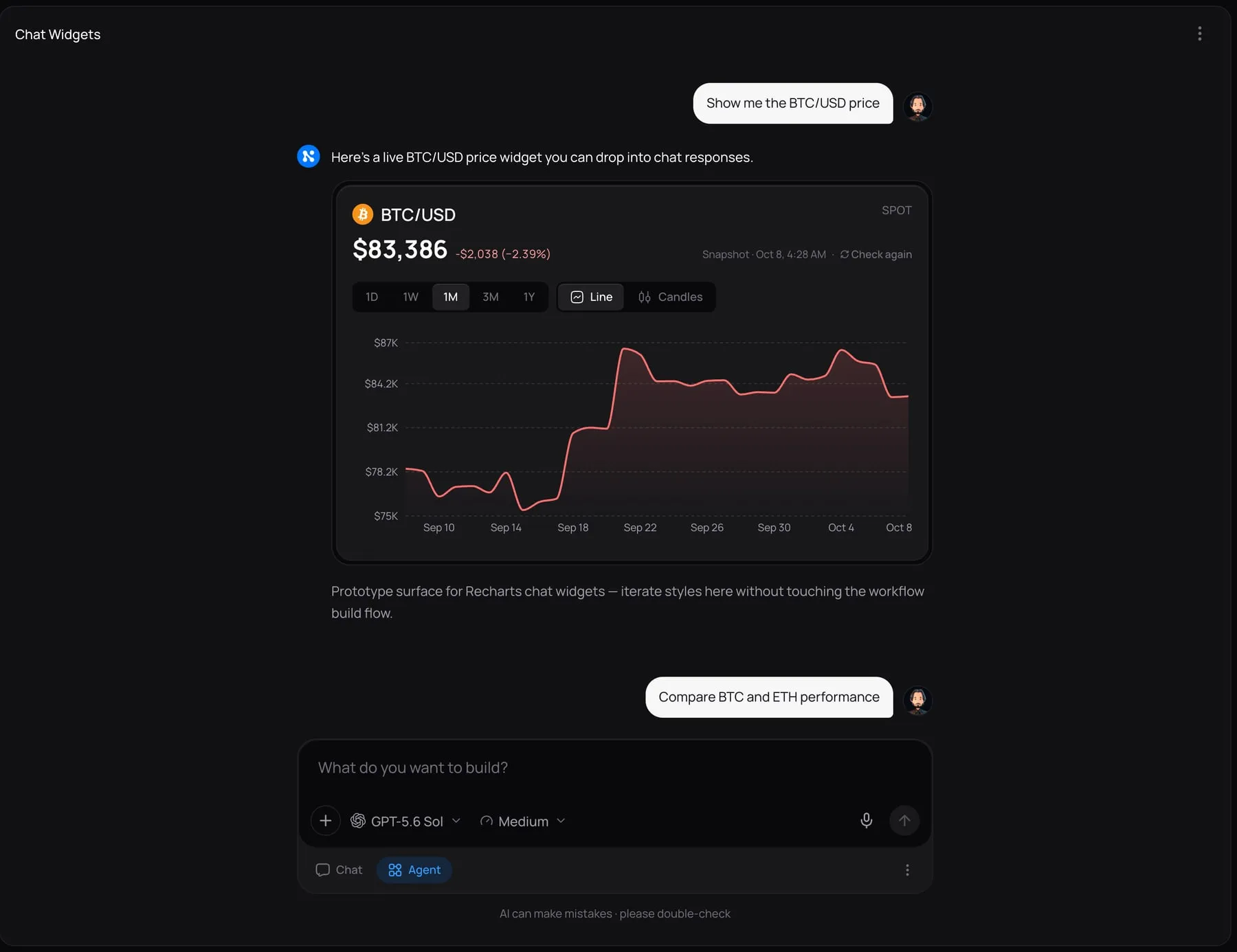
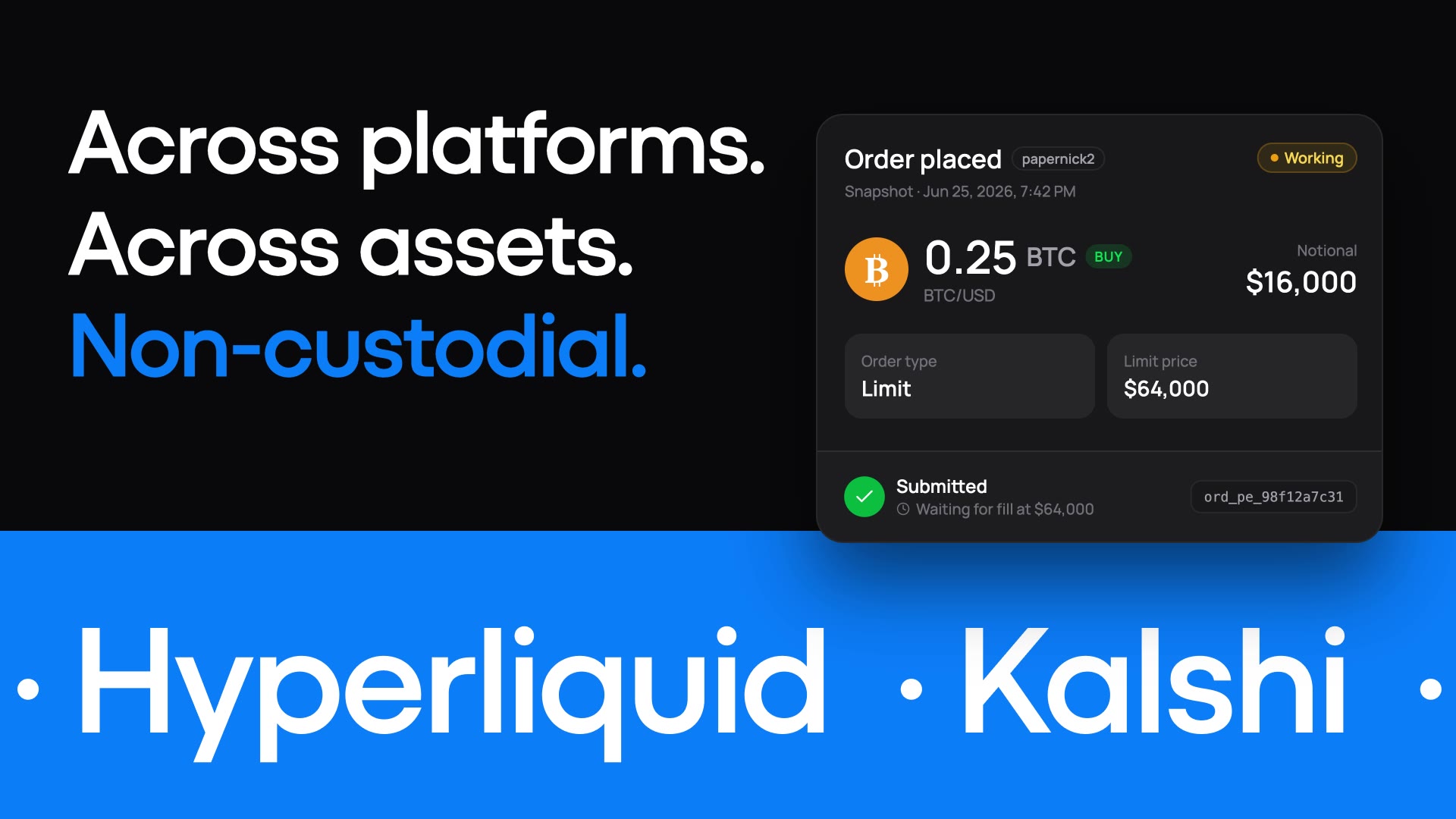
Nick answers with widgets: prices, comparisons, market sentiment, prediction markets and order receipts. They are frozen snapshots of what the agent actually fetched, with the source and the time it was read, rather than UI generated on the fly. Asking again adds a fresh answer instead of quietly changing the old one.
Small details make them read at a glance: a tray holding an inner card, tabular numerals and a split-gradient Fear & Greed meter. Every trade goes through a single approval card.
Launch films.
Made in Fountible.
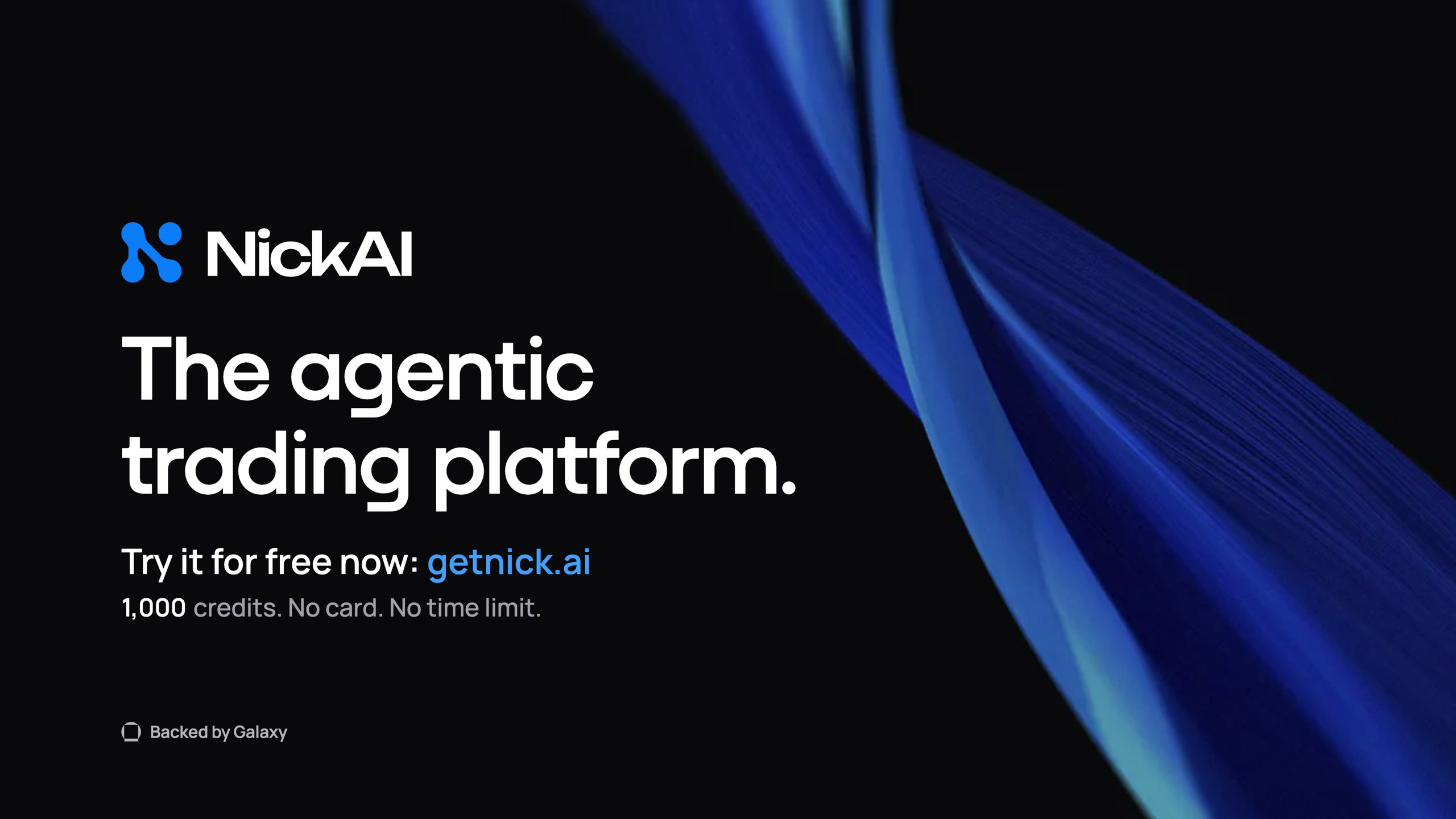
For the launch I made short films in Fountible, the design tool I built. Each one tells the product story in seconds: a plain-English request, then Nick building, testing, deploying and supervising the workflow behind it.
The Impact.
Shipping & Outcome.
The design system and the widget designs shipped into the production app, and the same widgets now fill the "Ask a question. Get a chart back." section of getnick.ai, the marketing site I created.
Working this way collapsed the distance between design and engineering. The spec was a working prototype, built with AI coding agents, that engineering could read, run and port instead of interpreting.